Department of Zoology Organised Field Visit The Department of Zoology, Government Degree College,

PRESS RELEASE
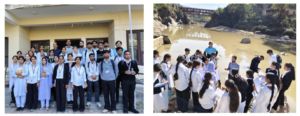
Department of Zoology Organised Field Visit The Department of Zoology, Government Degree College,
Chenani organised an educational field visit for students of UG semester 1st and 3rd. The
field visit was organised as part of the department's academic and practical learning activities
to bridge the gap between theoretical classroom teaching and practical field experience. The
primary objective was to familiarise students with scientific procedures involved in water
sampling, sample handling, labelling, preservation and transportation for subsequent
laboratory analysis. The activity also aimed to enhance students' understanding of freshwater
ecosystems, aquatic biodiversity, limnology and the importance of environmental monitoring
for maintaining ecological balance.
All the participating students actively engaged in field-based activities and gained first-hand
experience of scientific water sample collection. They were also familiarised with the
importance of standard sampling protocols and the role of water quality assessment in
identifying potential pollution sources, evaluating freshwater ecosystem health and
supporting aquatic biodiversity conservation. The collected water samples will be utilised for
further laboratory-based practical exercises and analysis.
The field visit was conducted under the supervision and academic guidance of Dr. Amit
Kumar Sharma, Dr. Arun Dev Singh and Mr. Jagdev Kumar, who accompanied the
students and explained the scientific significance of water sampling and environmental
monitoring. They also guided students regarding the appropriate field techniques, sample
preservation procedures and precautions necessary for obtaining reliable scientific results.
Prof. Raj Kumar Gupta, Principal of the College, appreciated the initiative undertaken by
the Department of Zoology and emphasised the importance of experiential and field-based
learning in higher education. He highlighted that such academic activities play a significant
role in enhancing students' practical knowledge, research aptitude, scientific temperament
and understanding of environmental challenges. He encouraged the faculty members to
continue organising field-oriented activities, educational visits and research-based
programmes to provide students with meaningful learning opportunities beyond the
classroom.
The initiative reflects the Department of Zoology's commitment to promoting practical
education, scientific inquiry and environmental awareness among students. Such field-based
academic exercises are particularly important in Zoology, Limnology, Fisheries Science and
Environmental Biology,
where direct observation and investigation of natural ecosystems form an essential
component of scientific learning.
The visit concluded with an interactive discussion on freshwater conservation, prevention of
water pollution and the role of scientific monitoring in the sustainable management of aquatic
resources.


