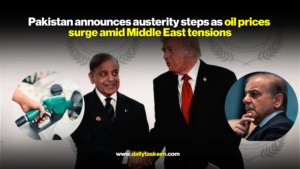
Prime Minister Shehbaz Sharif announced several steps aimed at managing the economic pressure caused by the ongoing conflict in the Middle East. The measures include reducing the government workforce in offices by half and introducing a four-day workweek to cut fuel consumption.
As part of the austerity plan, government expenditure will be reduced by 20 percent over the next two months, while fuel allocations for official vehicles will also be cut by half. Cabinet ministers have also decided to forgo their salaries for the same period.
In the education sector, schools will remain closed for two weeks starting next week, while universities will shift to online classes. Authorities have also banned unnecessary official foreign tours and directed that seminars and conferences be held in government buildings instead of hotels to minimise costs.
The move follows a steep hike in fuel prices, with petrol rates increasing by 55 Pakistani rupees, reaching the highest level in the country’s history. Petroleum Minister Ali Pervaiz Malik has warned that fuel prices may now be revised on a weekly basis depending on global market conditions.
The government said these measures are necessary to protect the economy and manage the impact of rising oil prices linked to the ongoing regional conflict.


