Justice must reach common man, not remain confined to courtrooms: Adv Devraj Sharma
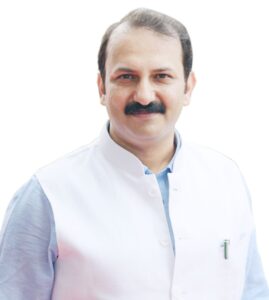
Welcomes Chief Justice’s people-centric vision as High Court shifts to Jammu; stresses speedy justice, affordable litigation and relief to aggrieved citizens
Jammu: Senior BJP leader and former Sarpanch Adv. Devraj Sharma has welcomed the commitment expressed by Chief Justice of the High Court of Jammu and Kashmir and Ladakh, Justice Pushpendra Singh Bhati, to make the new judicial session more beneficial for the people, describing it as an important opportunity to strengthen public confidence in the justice delivery system.
Reacting to the reopening of the main wing of the High Court in Jammu following the annual Darbar Move, Sharma said that the real success of the judiciary must ultimately be measured by how effectively it protects the rights of ordinary citizens, provides relief to aggrieved people and ensures timely justice to those approaching courts with genuine grievances.
He said the Chief Justice’s statement that the new session would be dedicated to the citizens of Jammu and Kashmir carries considerable significance, particularly for thousands of litigants who approach the courts with expectations of justice, protection of their constitutional rights and resolution of long-pending disputes.
Sharma observed that for an ordinary person, approaching the court is often accompanied by considerable financial, emotional and social hardship. Many litigants spend years pursuing cases involving property disputes, land ownership, service matters, family issues, compensation claims and other grievances. Repeated hearings, procedural delays, legal expenses and travel-related difficulties can add to their suffering.He emphasised that justice delayed often becomes a source of prolonged distress for litigants, particularly those belonging to economically weaker sections who cannot afford expensive and extended legal proceedings.
“The judiciary is the strongest institution of hope for a citizen who feels wronged or deprived of his legitimate rights. Every person approaching the court deserves to be heard fairly, treated with dignity and provided an opportunity to obtain justice without unnecessary delay,” Sharma said.
He urged the judicial administration to give particular attention to reducing case pendency, ensuring effective case management, strengthening court infrastructure and promoting the timely disposal of old and deserving cases. He also stressed the need to make legal assistance more accessible to poor and disadvantaged litigants who often struggle to understand complex judicial procedures.
Sharma said that the transition of the High Court’s main wing from Srinagar to Jammu under the bi-annual Darbar Move should also be viewed as an opportunity to improve accessibility and coordination in judicial administration. Adequate arrangements must be ensured so that litigants, lawyers and other stakeholders do not face unnecessary inconvenience during the transition.
He further observed that technology-driven judicial services, online case-status facilities, virtual hearings wherever appropriate and transparent communication regarding court proceedings can significantly reduce the difficulties faced by litigants, particularly those travelling from remote and far-flung areas of Jammu and Kashmir.
Highlighting the importance of public confidence in the judiciary, Sharma said that citizens must feel that the legal system is approachable, impartial and responsive to their concerns. The objective should not merely be to conduct court proceedings but to ensure that justice reaches those who genuinely need it.
He expressed hope that under the leadership of Chief Justice Justice Pushpendra Singh Bhati, the new judicial session would bring renewed attention to the concerns of common litigants and strengthen the justice delivery mechanism across the Union Territory.
Sharma also appealed to members of the Bar, judicial officers and all stakeholders to work collectively towards making the judicial system more efficient, accessible and citizen-friendly.
Concluding, he said that a strong judiciary is reflected not merely in the number of cases heard but in the confidence, relief and justice it delivers to ordinary citizens. For thousands of aggrieved people, the court is their last hope, and that hope must never be allowed to weaken because of avoidable delays or procedural difficulties.

